
Kaospilot Experience Design · In-company
Next generation experience design, for your team
Shared tools and language to design meaningful experiences that change the way people feel, think and act. Whether you want to shape how customers meet your brand, how a community gathers, or how your own people learn, we build the programme around the change you are trying to create.
Every programme is designed with you. Write to Andy and tell him what you’re working on; he’ll reply within two working days.
LEGO · adidas · IKEA · Novonesis · Sitra · Echoing Green · Oxfam
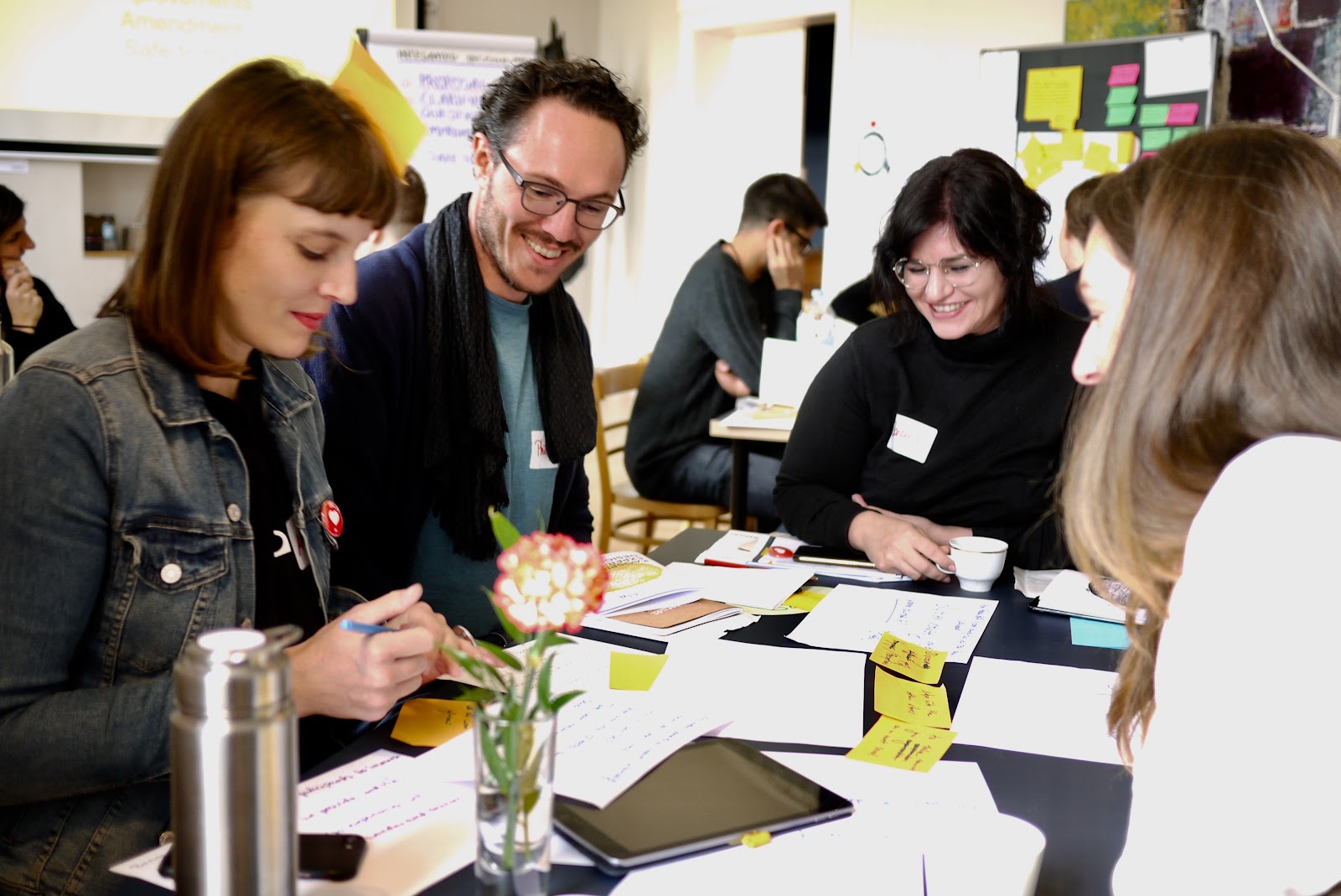
Why experience design, now
Experiences are where change takes root, or fades.
The organisations we work with are not trying to make a nicer moment. They are trying to change something: how a customer decides, whether a community keeps working together after the gathering ends, whether a new way of working actually takes hold. Experience design is the craft of designing for that change on purpose, from the first thing someone hears about you to what they carry home.
For customer-facing teams, the ground has shifted too. For twenty years, customer experience has been about removing friction. That work matters, and AI is now doing much of it. What’s left for people is the part that’s hardest to design: the moments where someone feels welcomed, understood, or confident enough to say yes. A life without friction is not the same as a meaningful life. Customers come back to brands that make them feel something, and they remember the peak and the ending far more than everything in between. Those moments don’t happen by accident. Someone designs them, or no one does.
Who this programme is for
The people who design what others experience: customer journeys, brand and store concepts, key relationships, gatherings, programmes and products. Most of our in-company work starts in one of three places. Yours may be a fourth.
Design the experiences your customers meet
“They remember how it felt, not what we said.”
Retail, brand, product and key account teams learn to design the moments that decide: the arrival, the meeting, the ending, and what people carry home.
Create the change you exist for
“We know what should change. We need people to want it.”
Foundations, NGOs and public teams learn to design programmes, gatherings and invitations that move people from knowing to doing.
Bring the open programme in-house
“We want the Experience Design training, for our whole team.”
The same three days as our open programme, built around your context, your cases and your people, with the before and after designed in.
You don’t need to be a designer by title. If you shape what other people experience, you already have the material. We bring the method.
Our approach
We train the people who shape the experience
We work with the people who decide what others meet, from store concepts and key account relationships to the gatherings and programmes an organisation runs, rather than with a central function alone.
We help you create meaningful value
Most experience work stops at the first two levels. We design for all five.
| Transformational | The customer leaves changed: more capable, more themselves, closer to who they want to be |
|---|---|
| Meaningful | It connects to something that matters to the person |
| Emotional | It creates connection and exceeds expectations |
| Contextual | It makes life easier, at a fair price |
| Functional | It does what it should |
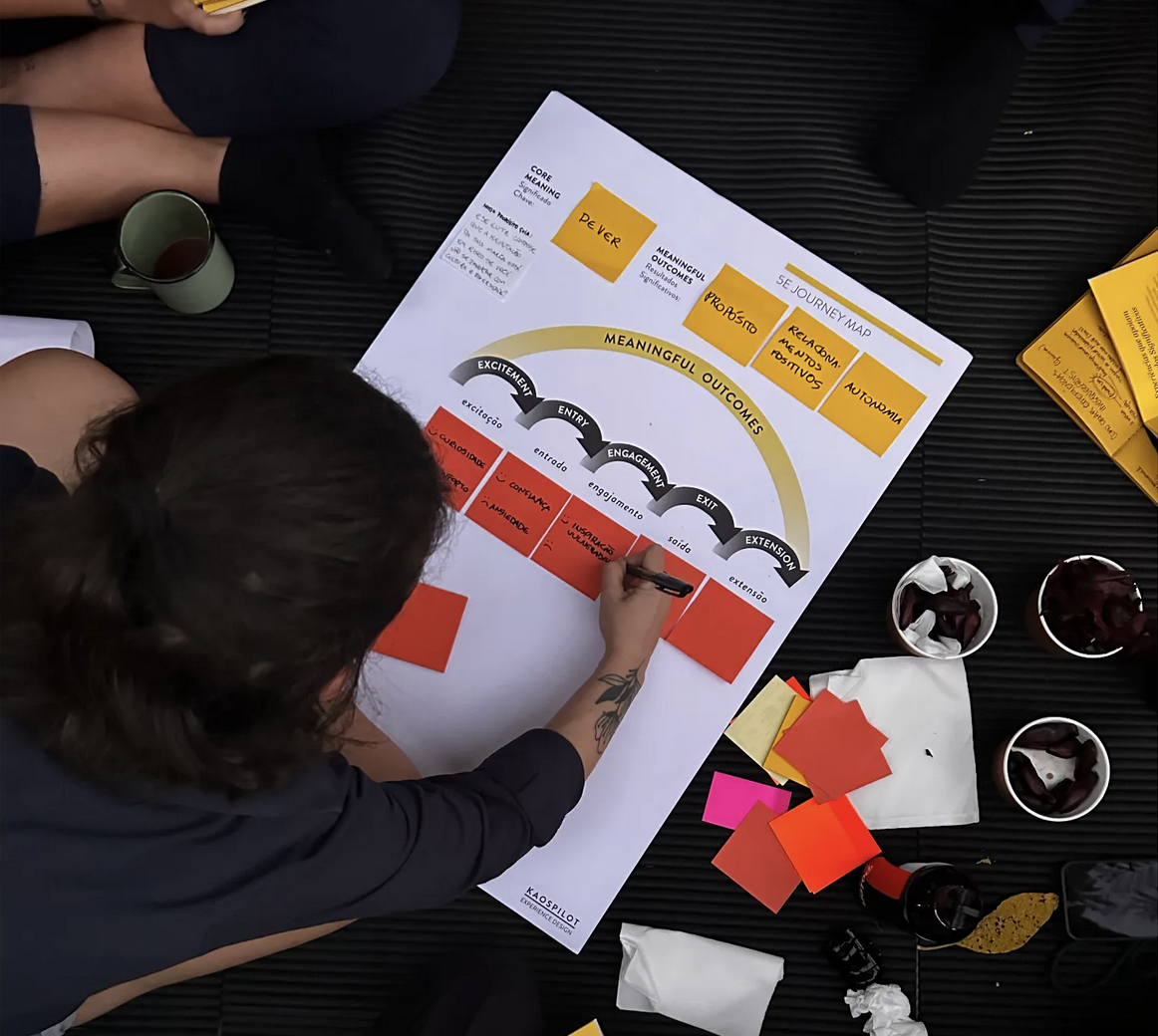
The emotional arc is the craft, not the journey map
Every provider teaches journey mapping. We teach what the map leaves out: the peak, the ending, and what people carry home. Every experience unfolds over time, from the first thing someone hears about you to what they carry home afterwards. The 5E model gives your teams one way to see and design that whole arc: Excitement, Entry, Engagement, Exit, Extension. It works on a store visit, a sales meeting, a community gathering and a product launch alike, and thousands of practitioners use it, from LEGO designers to retail interior designers. If you want a taste of how we think, our nine Gathering Design Strategies are free to read.
Learning transfer: before, during and after
We design every programme on the science of learning transfer, so what your people learn shows up in their work. At each stage we design two things: what participants experience, and what the organisation does to make the learning stick.
| What participants experience | What the organisation does | |
|---|---|---|
| Before | Each participant sets their own goals in a personal Learning Plan and names the customer moment they want to change. They arrive curious and knowing why they’re there. | Leaders choose the live challenges and agree what success will look like. Build out support systems for application, before the training starts. |
| During | Learning by doing on their own customer moments: prototype, test with customers, revise. Everyone leaves with one action to take within two weeks, and a buddy to check in. | Teams work across functions, so decisions don’t stall at handoffs. Leaders join the final presentations and hear the ideas first-hand. |
| After | Spaced Labs where teams bring back what they tried, get feedback and go again, so the new habits hold once everyday pressure returns. | The 5E language moves into briefs and reviews. Impact is looked for in the work weeks later. Teams take ownership. |

Programme overview
Every programme is built around your challenges. The core format follows three movements: Head (see the system your customers are in and the leverage points for creating value), Heart (design to touch them emotionally) and Hands (prototype it and test assumptions fast).
| Format | Length | Best for |
|---|---|---|
| Introduction | 1 day | Shared language for a leadership team or a launch moment |
| Core programme | 3 days: Head, Heart, Hands | A team redesigning customer experiences |
| Learning journey | 2 to 6 months, with spaced Labs | Lasting capability across functions or markets |
On site, offsite or online. In English, Spanish, German or Danish.
Learning outcomes
By the end of the programme, your people will:
- See the whole customer experience as an arc, from first impression to what people take home
- Design the moments that matter: the arrival, the peak and the ending
- Translate brand values into how customers are met, in a store, a meeting or a product, on a Tuesday
- Test ideas on customers within days instead of debating them for months
- Speak one language across retail, commercial, product and leadership, so good ideas travel
Cases
LEGO now runs part of the training itself.
Novonesis implemented all four customer experiences designed in the room.
Our research with Echoing Green became nine Gathering Design Strategies, now public.
Six organisations, six starting points. Open the ones that look like yours.
LEGO GroupDesign for Experience became LEGO’s own practice
LEGO is known for world-class design. The shift towards hybrid experiences called for designing for experience as deliberately as LEGO designs for play, while keeping its core values and playful cultural DNA.
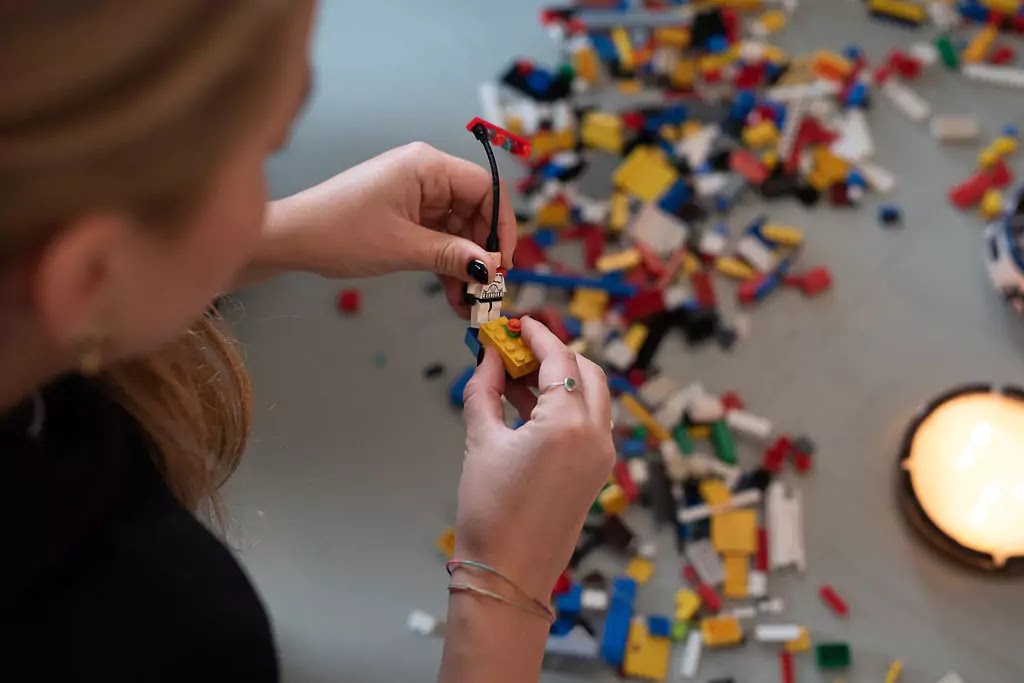
With a core team from LEGO Design, we researched designers’ learning needs, then built a custom methodology, the definition of Design for Experience the LEGO Group now uses, and fully customised training. Designers learn in teams on live challenges, and by building: the programme even has its own custom LEGO model.
The result: LEGO now runs part of the training internally. Design for Experience has become LEGO’s own practice, not ours.
NovonesisFour customer experiences implemented, and 5E adopted for B2B customer experience
In the middle of a merger, Novonesis (then Novozymes) wanted customer experiences that did more than inform: experiences that opened better conversations and deeper collaboration. Customer insight sat with a few people, and each department saw the journey through its own lens.
We interviewed five participants, then shaped the programme around their own design questions, from showing why customers should choose Novonesis to a hands-on tour that immerses visitors. Every participant arrived with a personal Learning Plan, including the support they’d need from their leader afterwards.
The result: all four customer experiences the teams designed in the room, including a new hands-on customer tour, were implemented afterwards. And the 5E model became a core organising structure for Novonesis’s B2B customer experience work.

adidasFive store concepts prototyped, from sales-oriented to experience-oriented retail
adidas retail wanted to move from sales-oriented to experience-oriented, while building a new London flagship against the clock. The team was customer-centric in theory; in practice, there was rarely time to prototype.
We worked on five live store challenges, from making product try-on a social experience to designing an Exit that turns a purchase into a commitment to use less plastic. Every participant left with one action to take within two weeks, and a buddy to check in.
The result: prototyped concepts for five store challenges, and a team with a shared language to build them. When our client later moved to On, he brought us with him.
OnFrom flawless event execution to experience strategy
On’s events are bold, beautifully produced and hosted by real On employees. The team wanted to move from flawless execution to experience strategy: clear intent before every event, and as much design before and after the day as during it.
We interviewed the team, then walked the 5E model through their own events, so they left with shared non-negotiables and a common way to brief. Work with a department is now under way.
SitraA shared language for designing behaviour change
Sitra, the Finnish Innovation Fund, works on how people in Finland can live more sustainably. The team designing its programmes, events and community invitations wanted shared tools and a shared language for experiences that change behaviour, not just inform.
We began with interviews across the team and design questions drawn from live Sitra cases. Then an online kick-off, two days together in Helsinki, a prototyping phase with check-in calls, and a final day to bring it together, closed by a retro on what had changed.
Between sessions, teams prototyped real experiences, from small library events to new ways of inviting a community in, and brought the learning back. The retro landed on a shared conclusion: behaviour change takes time, relationships and support, and experiences can be designed for all three.
Echoing GreenNine Gathering Design Strategies, built from the inside
Echoing Green funds and runs a fellowship for some of the world’s leading social changemakers. Its gatherings are where fellows meet, learn and build the relationships that carry their work. The question was how to design those gatherings so the change takes root after everyone goes home.
We interviewed fellows, board members, funders, facilitators and organisers, trained the team in experience design over two days, and worked with them on a convening strategy.
The research became nine Gathering Design Strategies, which we have since made free for anyone who designs gatherings.
Testimonials
About the team
Programme Director: Andy Sontag
Andy created the 5E model and the SHIFT method, used by thousands of designers and facilitators worldwide. For more than ten years he has designed at least eight programmes a year, for C-level teams, designers, sellers and activists alike, and has trained hundreds of LEGO designers in experience design. He is a Kaospilot graduate and a practising Vertical Development Coach, which means he pays as much attention to how people grow as to what they learn.
Kaospilot has spent more than 30 years designing experiences that change how people feel, think and act.
FAQs
Is this right for our team?
If your people design what others experience, whether customers, communities, participants or colleagues, yes. If you want a course about theory, there are better places. This is for teams who want to use experience design to create real change.
Do participants need a design background?
No. Most participants have never called themselves designers. They run stores, sales meetings or teams, and that’s exactly who we design for.
Can we get the open Experience Design programme tailored for our team?
Yes, and it is one of our most common requests. The same three days as the open programme, built around your context, your cases and your people, with the before and after designed in so the learning lands at work. Same conversation, same email.
How is this different from your open Experience Design programme?
The open programme brings people together from many organisations. In-company, everything is built around your customers, your brand and a live challenge your team is working on, so they leave with work in progress, not just new tools.
What does it cost?
It depends on the format, the number of participants and how much we design together beforehand. After a first conversation, Andy sends a short proposal with options and a clear price.
Can it run in our offices, stores or other countries?
Yes. We run programmes on site, or offsite or online, and have worked with teams around the world. We have rented castles, wellness resorts, an island but we are also happy to come to your office. It is in just important to us to consider the impact of the space of the outcomes we are looking for.
Do participants get a certificate?
Yes. Everyone who completes the programme receives a Kaospilot certificate and joins the Kaospilot Experience Design alumni community of practitioners worldwide.
What will we have afterwards?
Redesigned experiences you can use, one language, methodology and tool across teams, and a plan for how the learning continues once the programme ends.

Contact
Curious? Let’s set up a time to chat.
aso@kaospilot.dk
Not ready for a conversation yet?
Start with our nine Gathering Design Strategies: the thinking behind how we design trainings, offsites and gatherings people remember. Free, short, and a good test of whether our approach fits yours.